Extreme Heat and Health Among Unhoused Angelenos
Introduction: Extreme heat is a growing public health threat in Los Angeles County. Rising temperatures and longer heat seasons place disproportionate burdens on people with limited ability to avoid exposure, particularly those experiencing homelessness. While unhoused individuals are known to face heightened risks during heat events, little population-level evidence captures how extreme heat affects their daily lives, health, and coping strategies. Using monthly survey data PATHS collected during the summer and early fall of 2025, this data story documents how unhoused Angelenos experienced extreme heat, the symptoms they reported, how they coped, and where gaps in information and resources remain.
Methods: Between July and October 2025, PATHS participants were asked a set of questions about their experiences with extreme heat in the past month. These questions covered five domains: (1) frequency of uncomfortable heat; (2) heat-related health symptoms; (3) coping strategies; (4) sources of information about places or ways to stay cool; and (5) ways respondents helped others access heat-related resources. Analyses include all 3,389 monthly survey responses collected from 1,022 individuals during this period (July: 865 responses; August: 852; September: 852; October: 820).
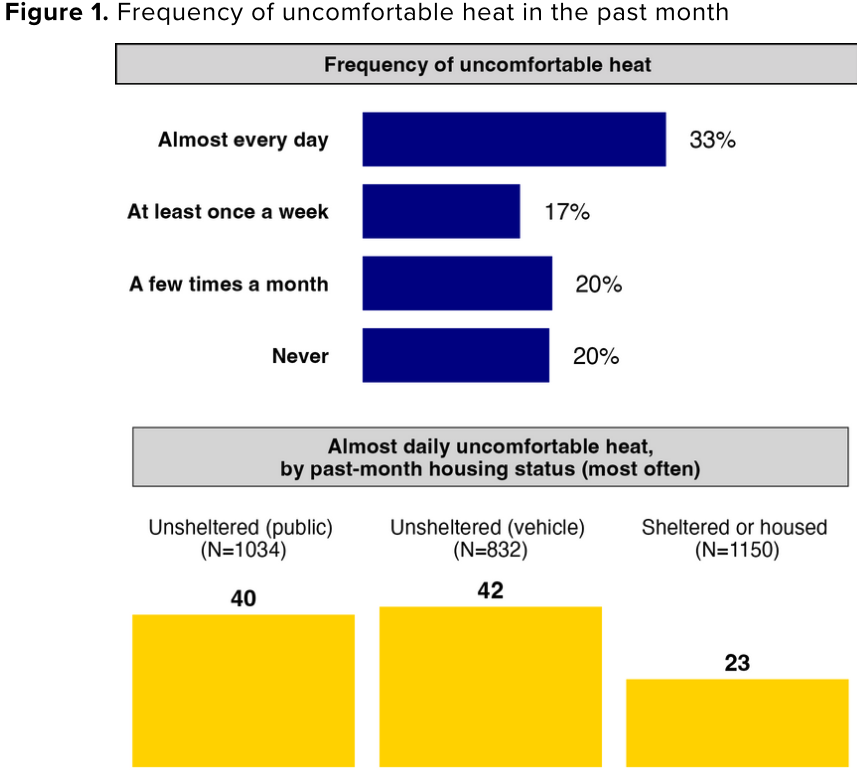
Between July and October 2025, periods of extreme heat across LA County were associated with widespread heat exposure among PATHS participants. Across all survey responses during this period, half (50%) reported experiencing uncomfortable heat at least weekly, including a third who reported uncomfortable heat almost every day. Experiences of uncomfortable heat were markedly more frequent among unsheltered respondents, regardless of whether they were living in public spaces or vehicles.
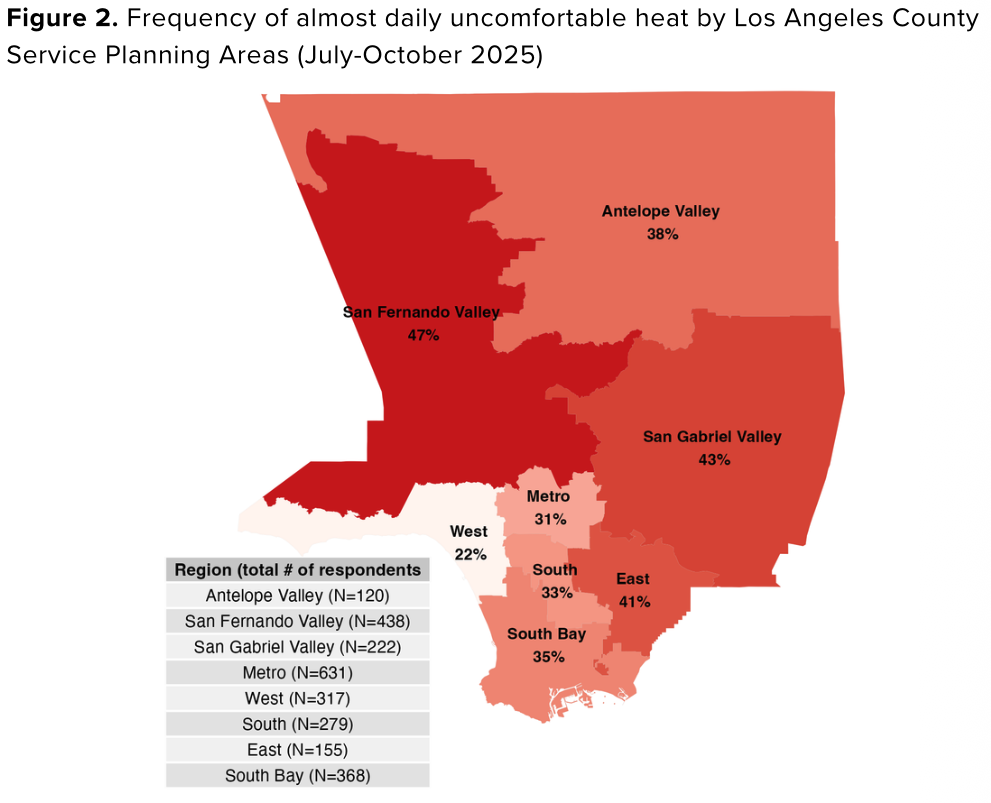
Heat exposure also showed clear geographic variation across the county’s Service Planning Areas (SPAs). Rates of experiencing uncomfortable heat almost daily between July and October were highest in the San Fernando Valley (47%) and San Gabriel Valley (43%), and lowest in Metro (downtown) LA (31%) and West LA (22%). These patterns closely mirrored regional temperature differences, with inland SPAs (i.e., Antelope Valley, San Fernando Valley, San Gabriel Valley) experiencing the highest maximum temperatures during the summer months.
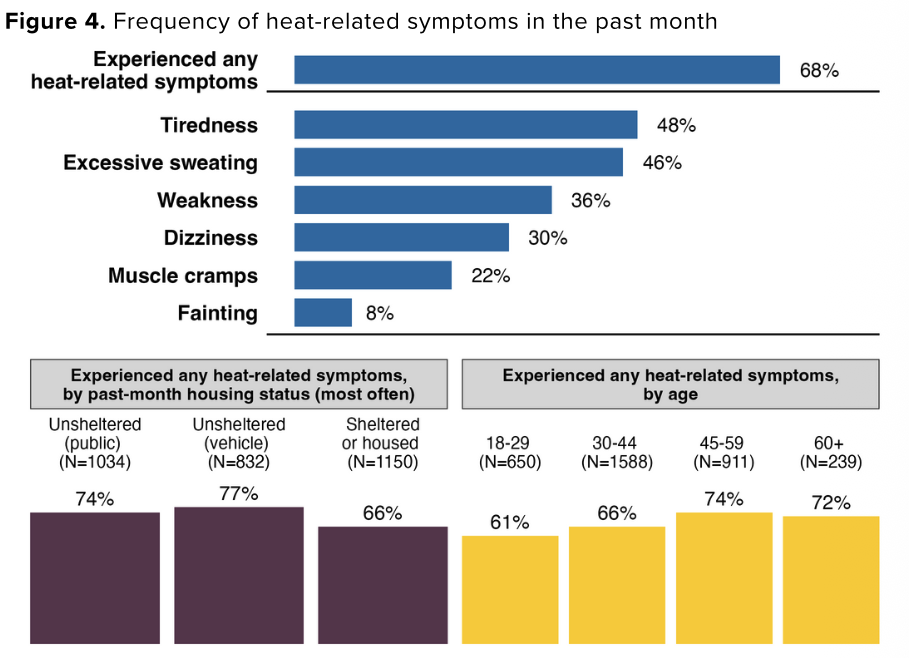
Heat exposure translated into substantial health impacts. Across all survey responses, just over two-thirds (68%) reported experiencing at least one heat-related symptom in the past month. Unsheltered respondents—both those living in public spaces and in vehicles—experienced a higher burden of heat-related symptoms than sheltered respondents. Approximately three-quarters of unsheltered responses reported at least one heat-related symptom, compared with about two-thirds of sheltered or housed responses. Older adults were disproportionately affected.
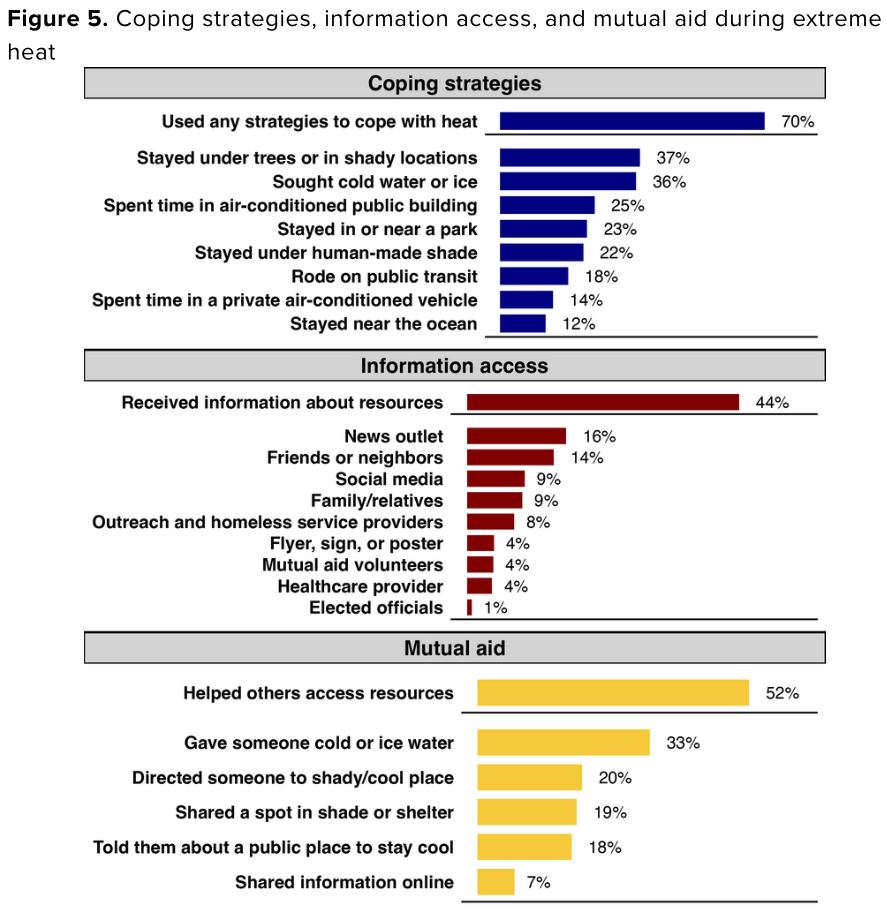
Despite these health challenges, many respondents reported engaging in coping strategies to deal with extreme heat. Seventy percent of respondents reported using at least one strategy to cope with the heat in the past month, such as reporting staying under trees or in shady locations (37%), in air-conditioned public buildings (25%), or in or near a park (23%) as well as seeking cold water or ice (36%) and riding on public transit (18%).
At the same time, access to information about heat relief remained limited. Fewer than half of respondents (44%) reported receiving information about places or ways to stay cool during extreme heat. When information was received, it most often came through news outlets (16%) or friends, neighbors, and acquaintances (14%).
Although formal information and resources were limited, respondents reported frequently supporting one another during extreme heat events. More than half (52%) reported helping others access heat-related resources, most often by providing cold or ice water (33%), directing someone to a shaded or cool location (20%), sharing shade or shelter (19%), or informing others about public places to stay cool (18%), highlighting the role of peer support and informal networks in responding to extreme heat.
Conclusion: Extreme heat posed a substantial burden on unhoused Angelenos during the summer of 2025. In the absence of adequate, affordable housing or shelter options that provide protection from heat exposure, our findings point to clear gaps in access to heat-relief information and formal support. These gaps suggest opportunities to strengthen heat-specific outreach, including clearer communication about cooling locations and hours of operation. Expanding access to shade, water, transportation, and cooling infrastructure, along with mobile, street-based interventions and support from street-based medical providers, may help reduce preventable health harms. At the same time, strong reliance on peer support underscores the importance of investing in community-based and mutual aid efforts as extreme heat intensifies with climate change.
As extreme heat becomes more frequent and intense due to climate change, integrating lived experience data from unhoused communities into heat preparedness and response planning will be essential. PATHS provides a critical platform for generating this evidence and informing more equitable heat mitigation strategies across Los Angeles County.